


Political leaders across France have shared Edouard Balladur tributes following the death of the former prime minister, who passed away in Paris this week at the age of 97. His family confirmed the news, with a private religious service planned for close family members.
Balladur served as prime minister from March 1993 to May 1995 under President Francois Mitterrand, leading what became known as a cohabitation government, where the president and prime minister came from opposing political parties. His tenure was defined by economic reforms and efforts to address the country’s public finances.
President Emmanuel Macron paid tribute to Balladur, describing him as a demanding, measured, and devoted servant of the republic who dedicated his life to public service. Macron said he wished to honor Balladur’s memory and extended his thoughts to the former leader’s family.
The country’s current prime minister also offered remarks, describing Balladur as a statesman with a reformist spirit whose influence would continue to serve as an example for future generations of political leaders. Other senior political figures shared similar reflections following news of his death.
Former President Nicolas Sarkozy described the loss in deeply personal terms, saying he had lost an example, a mentor, and a friend. The two had a long standing political relationship dating back decades, with Sarkozy crediting Balladur’s early influence on his own career.
Balladur was born in the Turkish city then known as Smyrna, now Izmir, into a family of Armenian and Catholic heritage. His family emigrated to France when he was young, and he grew up in Marseille before eventually moving to Paris to pursue his education.
He attended one of the country’s most prestigious institutions for training senior civil servants, a background that shaped his approach to governance throughout his career. He later became a close adviser to earlier French leaders before eventually rising to the role of prime minister himself.
During his time in office, Balladur pursued policies focused on reducing public spending and reforming the civil service, drawing comparisons to conservative leaders in other countries pursuing similar economic approaches during that period. His steady leadership during a period of high unemployment made him broadly popular at the time.
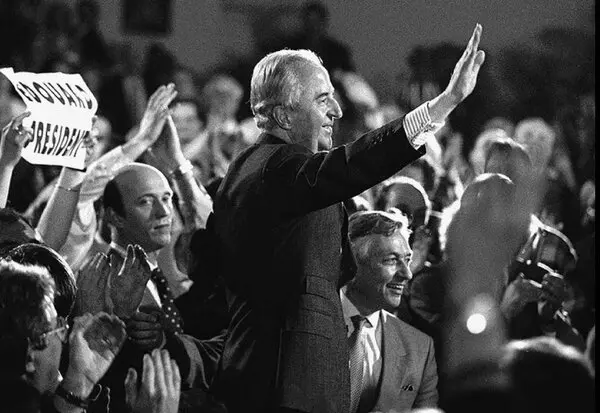
Encouraged by strong polling numbers, Balladur later launched an unsuccessful bid for the presidency in 1995, a campaign that ultimately reshaped divisions within the country’s conservative political movement for years afterward. His defeat marked the end of his national political ambitions.
In later years, Balladur faced legal scrutiny related to allegations connected to his presidential campaign, though he was ultimately acquitted by the relevant court in 2021. Supporters viewed the case as a difficult chapter that did not diminish his broader legacy of public service.
As tributes continue arriving from across the political spectrum, Balladur’s death marks the passing of one of the last major figures associated with a defining period in modern French political history. His decades of public service leave behind a complex but significant legacy in the country’s political story.