

Close Menu
Daljoog News
    What's Hot
    Interpol Operation Jackal Nets 58 Arrests

    Interpol Operation Jackal Nets 58 Arrests

    September 3, 2026
    UN Council Sets September Agenda On Iran

    UN Council Sets September Agenda On Iran

    September 3, 2026
    Digital Detox Retreats Grow Popular This Season

    Digital Detox Retreats Grow Popular This Season

    September 3, 2026
    Facebook X (Twitter) Instagram
    Thursday, September 3
    Daljoog News
    Facebook X (Twitter) YouTube Instagram
    • Home
    • General
    • World
    • Business
    • Technology
    • Politics
    • Finance
    • Health
    • Lifestyle
    • Sports
    • Travel
    Daljoog News
    Home»Politics»India, China, Russia Trade Realignment Gains Momentum Amid Tariff Disputes
    Politics

    India, China, Russia Trade Realignment Gains Momentum Amid Tariff Disputes

    Onu AkterBy Onu AkterAugust 24, 2025No Comments3 Mins Read
    Facebook Twitter Pinterest LinkedIn Tumblr Email
    Follow Us
    Google News
    India China Russia Trade Realignment Gains Momentum Amid Tariff Disputes
    India China Russia Trade Realignment Gains Momentum Amid Tariff Disputes
    Share
    Facebook Twitter LinkedIn Pinterest Email

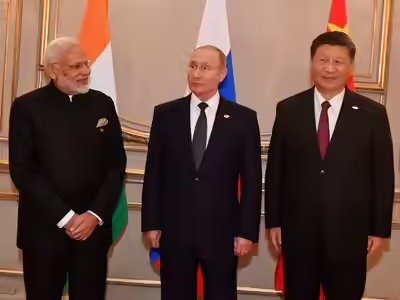
    Russian President Vladimir Putin is expected to visit India later this year, while Prime Minister Narendra Modi is preparing for his first trip to China in seven years. These meetings, tied to the Shanghai Cooperation Organisation (SCO) Summit, highlight more than diplomatic outreach. They symbolize a growing effort by the three nations to build a united front in global trade and politics.

    Analysts say this emerging trinity is fueled by U.S. tariffs and overdependence on the dollar. Trump’s tariff measures, designed to safeguard U.S. industries, may instead be accelerating Eurasian cooperation. Experts argue that the global system is no longer unipolar, with trade routes and financial flows diversifying beyond Western oversight.

    Manish Bhandari, founder of Vallum Capital, explained that each country brings its own strength: China leads in manufacturing, Russia dominates energy exports, and India offers a vast services sector and a large consumer market. Together, they form a powerful economic bloc with the capacity to reduce reliance on the U.S. dollar, shift trade flows to local currencies, and create new alternatives to Western-led systems.

    The scale of this partnership is striking. Combined, India, China, and Russia represent $53.9 trillion in GDP (PPP), nearly one-third of global output. They account for 20% of global exports, worth $5.09 trillion, and hold $4.7 trillion in foreign reserves, providing nearly 40% of the world’s safety net. With 3.1 billion citizens, they represent the largest consumer base in history.

    Trump’s tariff policies, intended to isolate these economies, appear instead to have strengthened their bond. By pushing defense and trade partners toward Western markets, the U.S. risks encouraging greater Eurasian cooperation in both economic and military spheres. Together, India, China, and Russia spend $549 billion on defense, about 20% of global military budgets, while also driving 35% of the world’s energy consumption.

    Sandeep Pandey, co-founder of Basav Capital, noted that U.S. sanctions and tariffs have already pushed India and China to buy Russian crude in local currencies, enabling them to build reserves while reducing dollar dependency. He added that this adjustment may prove vital in future currency and trade conflicts.

    Energy, manufacturing, and services together create a unique advantage. Russia’s energy resources, China’s production power, and India’s growing digital and services economy create a mix that could shift trade patterns for decades. Avinash Gorakshkar, a market strategist, stressed that this “trinity” is not just about economics but about shaping a new order where Eurasian economies have greater leverage in global negotiations.

    For India, the new alignment offers a chance to balance challenges and opportunities. By working with Beijing and Moscow, New Delhi could secure energy supplies, expand export markets, and gain a stronger voice in trade talks. Experts also suggest India could use the partnership to negotiate more favorable terms in China’s Belt and Road Initiative, especially as China’s export-led growth model faces pressure from U.S. tariffs and European trade barriers.

    Gaurav Goel of Fynocrat Technologies believes this alliance may also help India attract supply chains shifting out of China. With U.S. and European markets becoming more protectionist, companies are diversifying production into India, Vietnam, and other economies. This realignment could accelerate India’s rise as a global export hub.

    Bhandari emphasizes that the India China Russia trade partnership is more than just numbers. It reflects a transition toward a multipolar world where economic power is shared more evenly. He adds that the future may no longer be framed as “China+1” but rather “India+2,” signaling India’s role as an essential partner in the next phase of global commerce.
    Share. Facebook Twitter Pinterest LinkedIn Tumblr Email
    Onu Akter
    Onu Akter
    • Website
    • Facebook
    • Pinterest
    • Instagram
    • LinkedIn

    Onu Akter is a dedicated journalist at Daljoog News, known for her insightful reporting and compelling storytelling. With a keen interest in a wide range of topics, including current affairs, technology, lifestyle, and personal development, she brings a unique perspective to every piece she writes. Onu’s commitment to delivering accurate, well-researched news ensures that readers stay informed and engaged. When she’s not covering stories, she explores new ideas and seeks fresh inspiration from the ever-evolving world around her.

    Related Posts

    Germany's eastern state of Saxony Anhalt heads to the polls this week, with the Saxony Anhalt election AfD gains narrative dominating coverage as the far right Alternative for Germany party hopes to build on recent momentum partly fueled by public fatigue over the ongoing war in Ukraine. The election arrives at a particularly tense moment in German politics, coinciding with a diplomatic dispute between Berlin and Moscow over an alleged Russian backed drone attack on an airport in the eastern part of the country. That controversy has become intertwined with the campaign's broader political dynamics. The Alternative for Germany's lead candidate for the state has campaigned heavily on themes of war weariness and skepticism toward continued German support for Ukraine, arguments that appear to be resonating with a segment of voters increasingly frustrated by the economic costs associated with the ongoing conflict. Chancellor Friedrich Merz's governing coalition has faced mounting criticism over its handling of both the war and broader economic challenges, including factory closures and rising living costs that opposition parties have used to argue the current government has failed to adequately protect German interests. The far right party's leader has directly criticized the chancellor's approach, accusing him of prioritizing international politics over domestic concerns and suggesting his government has lost meaningful connection with everyday voters struggling with economic pressures across the country. Allies of the chancellor have pushed back forcefully against these characterizations, with one prominent supporter accusing the far right party's leadership of effectively serving Russian interests by amplifying narratives that could weaken Western unity and support for Ukraine at a critical moment in the conflict. Polling ahead of the election suggests the Alternative for Germany could make significant gains compared to previous results in the state, though most political analysts do not expect the party to secure enough support to lead a governing coalition given ongoing resistance from mainstream parties to cooperate with it. This election is being closely watched as a broader indicator of political sentiment across eastern Germany, a region that has historically shown stronger support for the far right party compared to western parts of the country, partly reflecting distinct economic and social conditions in the formerly communist east. International observers have noted the election's significance beyond domestic German politics, given its potential implications for continued Western unity on Ukraine policy. Any significant far right gains could be interpreted as a warning sign for mainstream parties navigating similar political pressures elsewhere in Europe. The broader dispute over the alleged Russian drone attack has added additional complexity to the campaign's final days, with the far right party's rhetoric around the incident drawing sharp criticism from government officials who argue it reflects a troubling willingness to dismiss legitimate security concerns. As voters prepare to cast their ballots, the outcome will offer important insight into how deeply war fatigue and economic frustration have penetrated German political sentiment. Regardless of the final results, this election is likely to shape ongoing debates about Germany's role in supporting Ukraine through the challenging months ahead

    Saxony Anhalt Election Looms Amid AfD Gains

    September 3, 2026
    Tributes Pour In For Former French PM

    Tributes Pour In For Former French PM

    September 2, 2026
    Supreme Court Backs Trump Mail Voting Order

    Supreme Court Backs Trump Mail Voting Order

    September 1, 2026

    Comments are closed.

    Our Picks
    Germany's eastern state of Saxony Anhalt heads to the polls this week, with the Saxony Anhalt election AfD gains narrative dominating coverage as the far right Alternative for Germany party hopes to build on recent momentum partly fueled by public fatigue over the ongoing war in Ukraine. The election arrives at a particularly tense moment in German politics, coinciding with a diplomatic dispute between Berlin and Moscow over an alleged Russian backed drone attack on an airport in the eastern part of the country. That controversy has become intertwined with the campaign's broader political dynamics. The Alternative for Germany's lead candidate for the state has campaigned heavily on themes of war weariness and skepticism toward continued German support for Ukraine, arguments that appear to be resonating with a segment of voters increasingly frustrated by the economic costs associated with the ongoing conflict. Chancellor Friedrich Merz's governing coalition has faced mounting criticism over its handling of both the war and broader economic challenges, including factory closures and rising living costs that opposition parties have used to argue the current government has failed to adequately protect German interests. The far right party's leader has directly criticized the chancellor's approach, accusing him of prioritizing international politics over domestic concerns and suggesting his government has lost meaningful connection with everyday voters struggling with economic pressures across the country. Allies of the chancellor have pushed back forcefully against these characterizations, with one prominent supporter accusing the far right party's leadership of effectively serving Russian interests by amplifying narratives that could weaken Western unity and support for Ukraine at a critical moment in the conflict. Polling ahead of the election suggests the Alternative for Germany could make significant gains compared to previous results in the state, though most political analysts do not expect the party to secure enough support to lead a governing coalition given ongoing resistance from mainstream parties to cooperate with it. This election is being closely watched as a broader indicator of political sentiment across eastern Germany, a region that has historically shown stronger support for the far right party compared to western parts of the country, partly reflecting distinct economic and social conditions in the formerly communist east. International observers have noted the election's significance beyond domestic German politics, given its potential implications for continued Western unity on Ukraine policy. Any significant far right gains could be interpreted as a warning sign for mainstream parties navigating similar political pressures elsewhere in Europe. The broader dispute over the alleged Russian drone attack has added additional complexity to the campaign's final days, with the far right party's rhetoric around the incident drawing sharp criticism from government officials who argue it reflects a troubling willingness to dismiss legitimate security concerns. As voters prepare to cast their ballots, the outcome will offer important insight into how deeply war fatigue and economic frustration have penetrated German political sentiment. Regardless of the final results, this election is likely to shape ongoing debates about Germany's role in supporting Ukraine through the challenging months ahead

    Saxony Anhalt Election Looms Amid AfD Gains

    September 3, 2026
    Tributes Pour In For Former French PM

    Tributes Pour In For Former French PM

    September 2, 2026
    Supreme Court Backs Trump Mail Voting Order

    Supreme Court Backs Trump Mail Voting Order

    September 1, 2026
    Canada Deepens Tariff Fight With The US

    Canada Deepens Tariff Fight With The US

    August 31, 2026
    Stay In Touch
    • Facebook
    • Twitter
    • Instagram
    • YouTube
    Don't Miss
    Dax Shepard Opens Up About Teen Car Accident That Still Haunts Him

    Dax Shepard Opens Up About Teen Car Accident That Still Haunts Him

    Lifestyle February 10, 2026

    Actor Dax Shepard has shared details of a car accident he survived as a teenager…

    Iran Threatens Ukraine Over Alleged Drone Support to Israel

    Iran Threatens Ukraine Over Alleged Drone Support to Israel

    March 16, 2026
    CIA Director John Brennan

    CIA Director John Brennan: Key Role in U.S. Intelligence

    July 9, 2025
    Musk’s X Sues New York Over Hate Speech Law

    Musk’s X Sues New York Over Hate Speech Law

    June 19, 2025
    About Us

    Daljoog News is a trusted news platform that brings you the latest global and local updates with accuracy and fairness. We are committed to clear and unbiased reporting, covering topics like politics, business, technology, science, and culture and more. Using the latest technology and expert journalism, we provide reliable coverage of important stories. Stay informed, inspired, and empowered with Daljoog News—your source for breaking news, the latest updates, and videos that matter.

    Email Us: info@daljoognews.com

    Our Picks
    Cybersecurity Stocks Rally On AI Driven Demand

    Cybersecurity Stocks Rally On AI Driven Demand

    September 3, 2026
    Bitcoin Drops As Rate Hike Bets Climb Higher

    Bitcoin Drops As Rate Hike Bets Climb Higher

    September 2, 2026
    Trumps Party Faces Pressure As Oil Prices Spike

    Trumps Party Faces Pressure As Oil Prices Spike

    September 2, 2026
    Latest News
    Interpol Operation Jackal Nets 58 Arrests

    Interpol Operation Jackal Nets 58 Arrests

    September 3, 2026
    UN Council Sets September Agenda On Iran

    UN Council Sets September Agenda On Iran

    September 3, 2026
    Digital Detox Retreats Grow Popular This Season

    Digital Detox Retreats Grow Popular This Season

    September 3, 2026
    Facebook X (Twitter) RSS YouTube Instagram
    • Home
    • About Us
    • Contact Us
    • Our Authors
    • Privacy Policy
    • Terms & Conditions
    • Sitemap
    © 2026 DaljoogNews.com

    Type above and press Enter to search. Press Esc to cancel.