


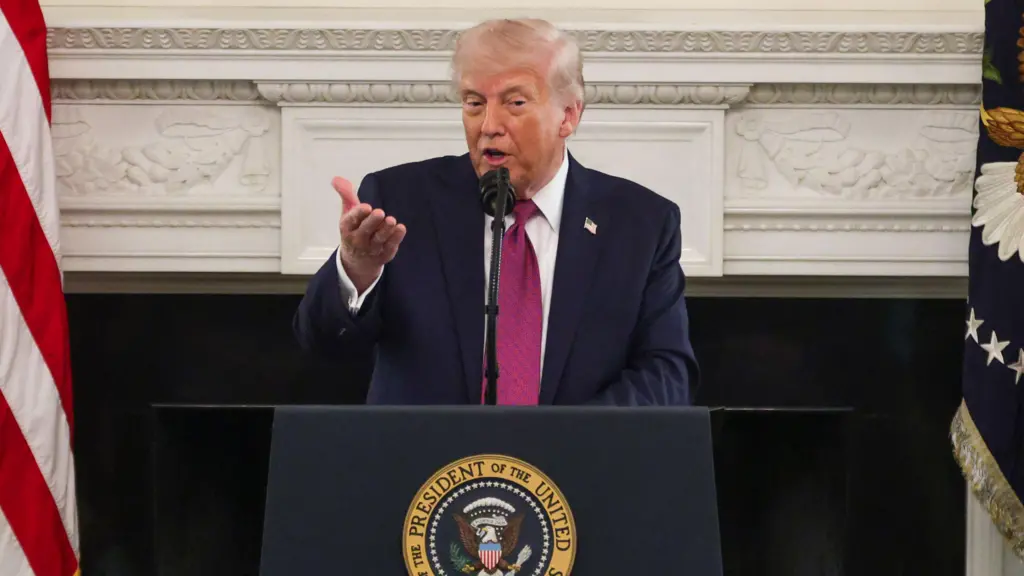
Trump Iran ceasefire is entering a critical phase as U.S. President Donald Trump confirms Washington will not extend the current truce with Iran. The decision signals a shift toward a faster resolution in high-stakes negotiations.
According to Daljoog News analysis, the refusal to extend the Trump Iran ceasefire reflects a calculated move to maximize pressure on Tehran while maintaining a strong bargaining position.
The timing is crucial as the ceasefire deadline approaches. Both sides now face a narrowing window to secure a lasting agreement or risk renewed tensions that could impact regional stability.
What Happened?
President Trump said in a CNBC interview that the United States has no intention of extending the Trump Iran ceasefire. He made it clear that the current timeline is limited and that prolonging temporary arrangements is not a priority.
The U.S. leader described Washington’s position as highly favorable. He pointed to sustained economic pressure and diplomatic leverage as key factors shaping the current phase of the Trump Iran ceasefire talks.
Coverage referenced by The Guardian indicates the administration is now aiming for a comprehensive agreement rather than extending short-term deals.
This marks a shift from earlier approaches where deadlines were often extended to keep negotiations alive.
Why This Matters
The decision to end the Trump Iran ceasefire without extension raises immediate concerns about stability in the region. Without a renewed agreement, tensions between Washington and Tehran could rise quickly.
Global markets may also react. Any disruption linked to the Trump-Iran ceasefire could influence oil prices and broader economic confidence.
The move also tightens diplomatic pressure. By limiting time, the U.S. is forcing faster decisions, leaving Iran with fewer options to delay or reshape negotiations.
What Analysts or Officials Are Saying
Analysts see the Trump-Iran ceasefire strategy as a pressure-driven approach. Many believe the U.S. is using time constraints to push Iran toward accepting key terms.
Officials familiar with the situation suggest Washington’s confidence comes from ongoing sanctions that have increased economic strain on Tehran.
However, some experts warn that the Trump Iran ceasefire approach carries risks. If pressure becomes too intense, it could lead to resistance rather than compromise.
Diplomatic sources say discussions continue behind closed doors, but expectations remain uncertain.
Daljoog News Analysis
The Trump Iran ceasefire decision highlights a clear strategic shift. Rather than extending negotiations, the U.S. is accelerating them.
This approach may strengthen leverage, but it also reduces flexibility. If Iran refuses to concede under pressure, the situation could stall or escalate.
There is also a credibility factor. By aiming for a major deal, the administration is setting high expectations. Success would reinforce U.S. influence, while failure could weaken its position.
Daljoog News analysis suggests the outcome will depend on whether pressure leads to compromise or confrontation.
What Happens Next
The final days of the Trump Iran ceasefire will be decisive. Negotiators must act quickly to reach common ground.
If progress is made, a broad agreement could emerge that addresses security and economic concerns.
If talks fail, the end of the Trump Iran ceasefire may lead to renewed tensions and possible escalation.
Regional and global actors will continue to monitor developments closely as the situation evolves.